Blood pressure and oxygen saturation measurements on arms and legs for children and infants
Measuring blood pressure and oxygen saturation in the arms and legs is a safe and painless test that allows the doctor to simultaneously assess blood pressure and oxygen levels in different parts of the child's body. This test helps the doctor obtain important information about the child's circulatory function and possible disorders.


What is it?
Measuring blood pressure and oxygen saturation in the arms and legs is a simple and completely safe test that helps the doctor assess how the blood is circulating in the child’s body and how well it is saturated with oxygen. Unlike a regular blood pressure check, measurements are taken in several places on the body – on the arms and legs. This allows the doctor to compare the indicators and understand whether the blood circulation is working smoothly throughout the body.
This test is especially important if the doctor suspects a congenital heart defect, narrowing of the blood vessels, or other circulatory problems. It helps determine whether oxygen-rich blood is getting to all parts of the child's body well.
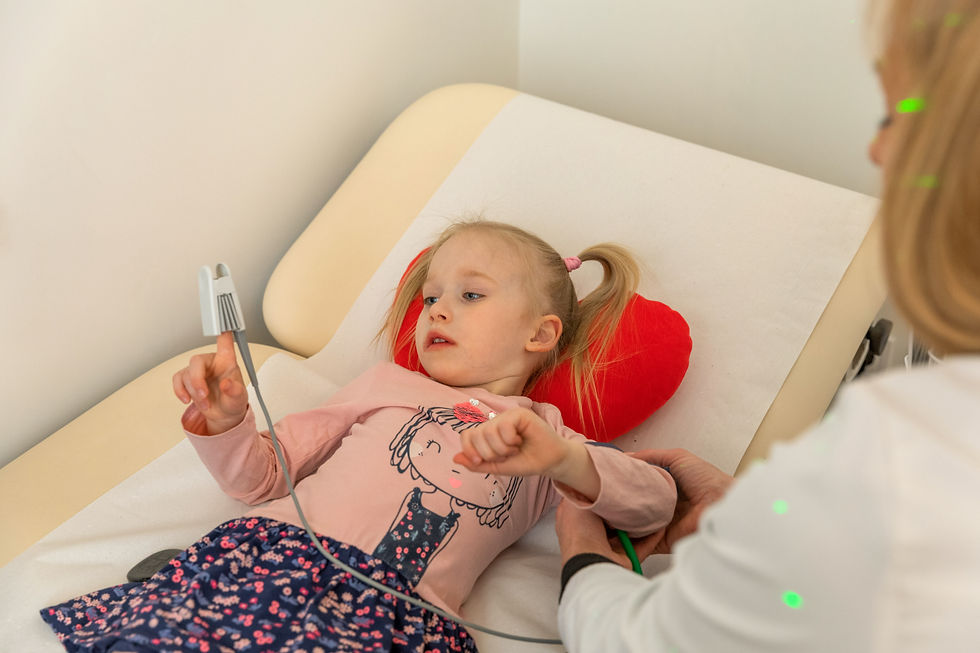
The procedure is painless, quick, and completely safe for the child – it does not use radiation, needles, or any other invasive methods. Children usually take this test calmly, as it resembles a regular blood pressure measurement, only with small cuffs on the arms and legs and a small sensor on the finger that shines with a soft light.
How is it done?
During the test, the child sits or lies still while a doctor or nurse places small blood pressure cuffs on the arms and legs – similar to a regular blood pressure measurement. At the same time, oxygen sensors (pulse oximeters) are placed on one finger, which use light to measure how well the blood is saturated with oxygen.
All measurements are taken at rest, when the child is relaxed. The devices automatically record the data, and the doctor compares it between the arms and legs to make sure that the blood circulation is even.
The entire procedure takes only 10-15 minutes, is completely painless, and does not cause any discomfort. Sometimes the examination is performed separately, but sometimes as part of a broader heart health examination or consultation with a pediatric cardiologist.
When is it needed?
Blood pressure and oxygen saturation measurements on the arms and legs of children are performed in various cases, such as:
-
if there is suspicion of congenital heart disease;
-
for children with already diagnosed heart diseases, during a regular visit;
-
if the doctor wants to check for differences in blood pressure or oxygen saturation between the upper and lower parts of the body;
-
if there is suspicion of vascular narrowing or circulatory disorders;
-
for other reasons on the advice of a doctor.
The examination helps to detect problems early that might otherwise go unnoticed, and is a valuable method in pediatric cardiological diagnostics and monitoring.
How to prepare?
This procedure does not require any special preparation, but a few simple recommendations will help to get more accurate results:
-
It is advisable for the child to rest for 5–10 minutes before the examination so that the blood pressure stabilizes.
-
Avoid foods or drinks containing caffeine (such as cola or chocolate) for at least 1-2 hours before your visit.
-
Avoid vigorous running or playing immediately before the test, as physical exertion may temporarily affect the results.
-
Choose comfortable clothing for your child that allows for easy freeing of arms and legs for cuffing.
-
If your child is taking medication, continue taking it as usual unless your doctor has given you other instructions.
Learn how to prepare for a doctor's consultation at the Medica Riga clinic.